


Fintech

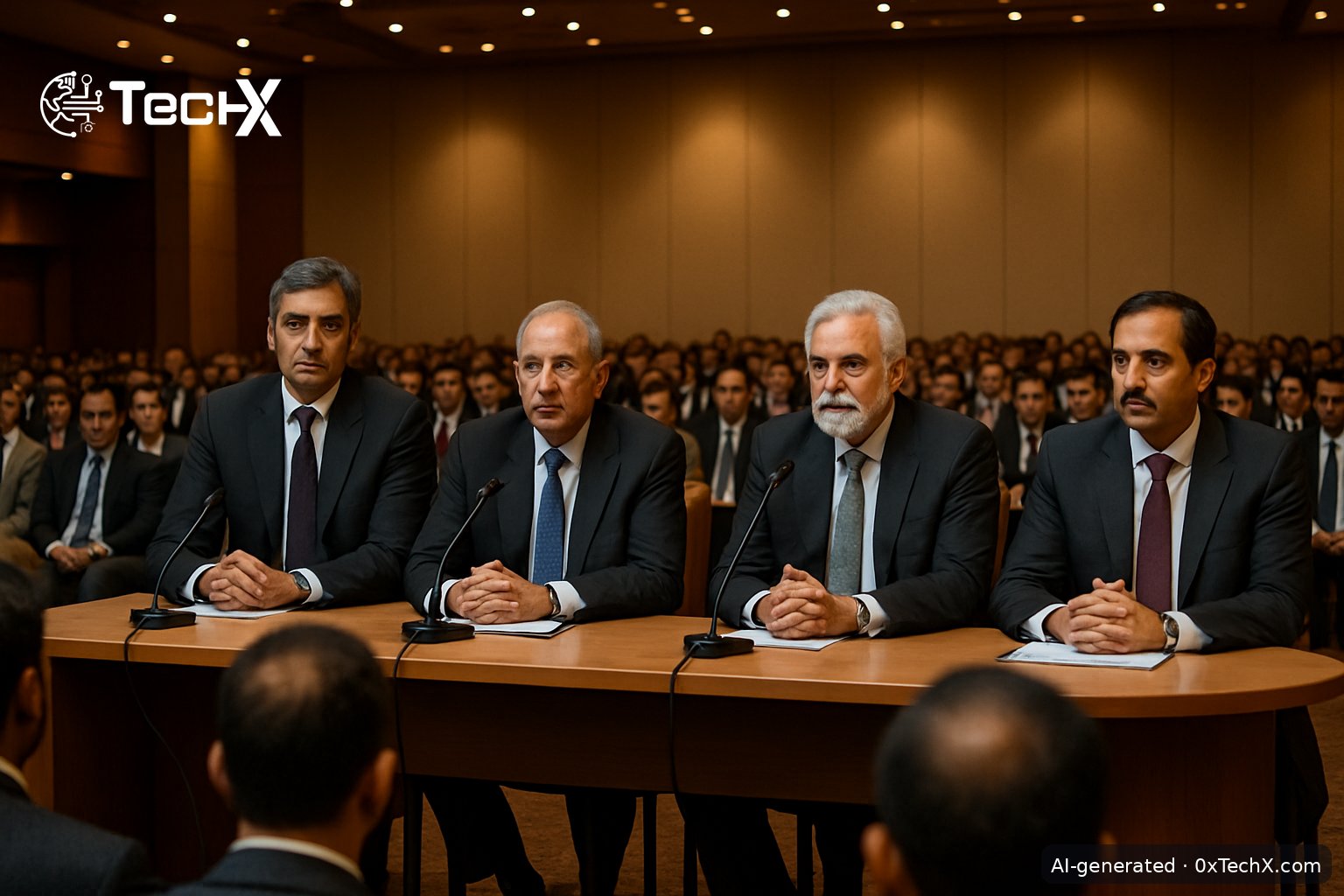
Pakistan's Top Financial Regulators Align Policy on Digital Credit and Crypto at Fintech Forum
• Four major regulators (SBP, SECP, Pakistan Digital Authority, PVARA) shared a single platform to outline cross-sector policy for Pakistan's fintech stack. • Digital payments now account for 92% of transaction volume, pushing SBP and SECP focus toward alternative credit scoring and digital lending frameworks. • PVARA integration allows licensed virtual asset service providers to open bank accounts, moving Pakistan's estimated 40 million crypto users into a regulated ecosystem. • The coordinated approach enables founders to build multi-layered products—such as crypto-integrated lending apps—without navigating conflicting agency rules.
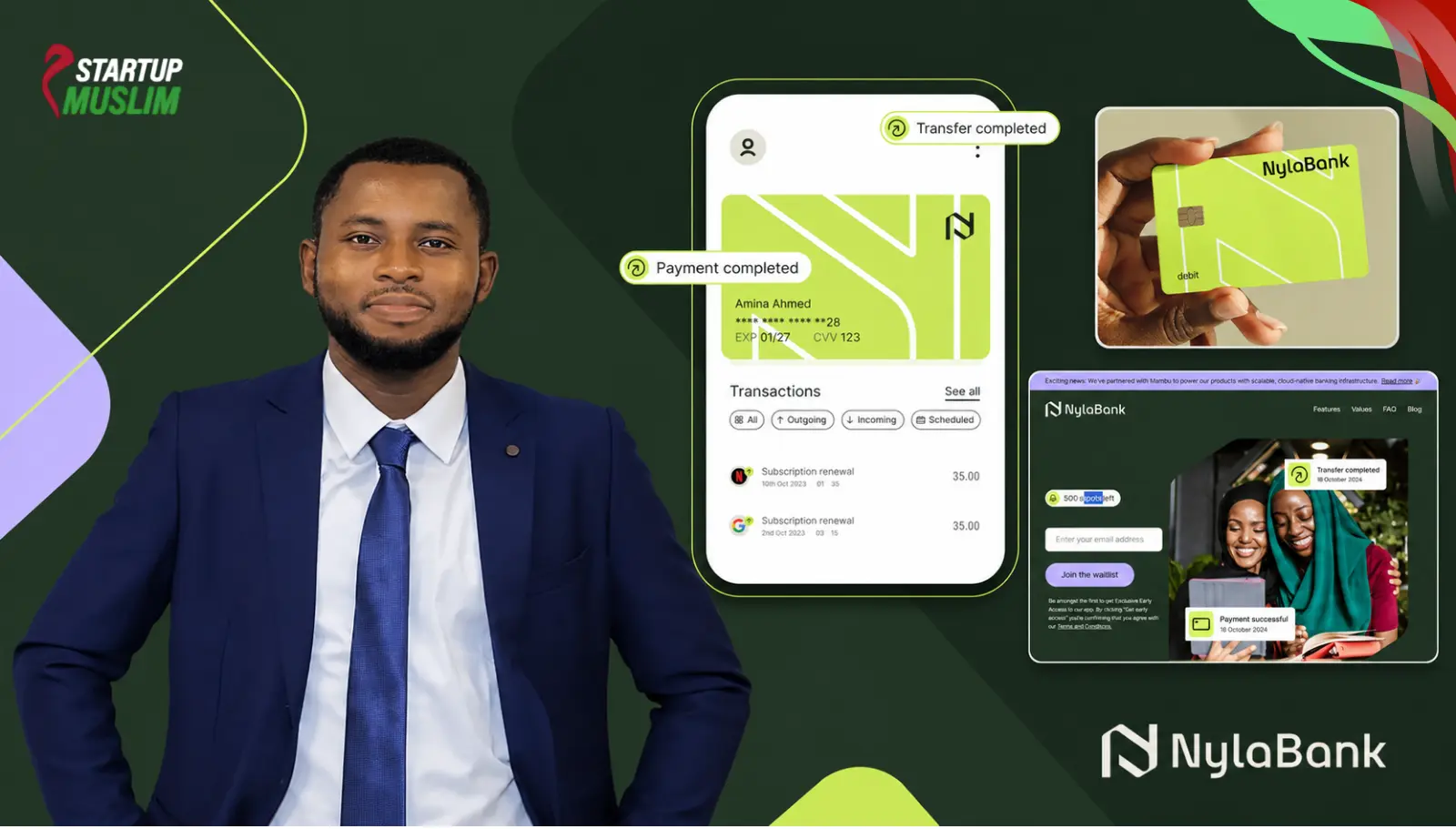
NylaBank Secures $550K Pre-Seed to Build Pan-African Islamic Banking Platform
• NylaBank raised an oversubscribed $550,000 pre-seed round led by Ingressive Capital to build a pan-African Islamic finance platform. • The startup leverages an asset-light model, partnering with licensed banks and utilizing Mambu’s core banking technology to bypass immediate regulatory bottlenecks. • Targeting Africa's 450 million Muslims, the platform will initially launch in Ghana before expanding to Nigeria and other key markets. • The product roadmap includes payments, cross-border remittances, Shariah-compliant financing, and wealth management tools like Sukuk and ETFs.
Fasset Raises $68M Series C at $1B Valuation to Scale Stablecoin Banking Infrastructure
• Fasset secured $68 million in Series C financing led by SBI Group, elevating the neobank to a $1 billion valuation. • The round pushes Fasset's 2026 funding to $119 million and total historical capital to over $150 million. • Capital will fund the expansion of "Own Network," a regulated infrastructure connecting banks, telcos, and payment providers across 100 corridors. • The company will replace agentic AI buzzwords with practical investments in automated artificial intelligence to route transactions and settle stablecoins. • Fasset currently processes $40 billion in annualized volume, serving 3 million wallets and 1,000 enterprise clients across 125 countries.
Pakistan Deploys $10M for Startup Fund Phase 2, Eyes $50M Expansion via World Bank and IFC
- Government launches PSF Phase 2 with a $10M equity-free grant pool, acting as a 30% "last cheque" top-up for private venture capital rounds. - IT Ministry finalizes negotiations with the World Bank, IFC, and ADB to scale the vehicle up to $50 million. - Strategic shift: Islamabad will outsource fund management to an international firm via RFP, installing a structural firewall against political interference to reassure foreign LPs. - The fund prioritizes startups aligned with the 'Uraan Pakistan' framework, specifically targeting fintech, healthtech, and edtech sectors driving IT exports and job creation.
Kanam Pay Transforms African Mobile Money By Turning the Face into Financial Infrastructure
• Kanam Pay executes a B2B pivot, transforming from a consumer app into a white-label biometric API for African financial institutions. • The platform decouples capital access from smartphone dependency, allowing users to execute transactions via facial recognition and PIN. • Targeting UEMOA and CEMAC regions, Kanam Pay circumvents massive customer acquisition costs by integrating directly with established networks, like its partnership with LigdiCash (100,000+ users, 6,000 agents). • Security architecture features 99.8% biometric accuracy, liveness detection, and strict data segregation to ensure regulatory compliance and institutional trust.
Haball Closes $52M Pre-Series A and Crosses $3B in B2B Payments Prior to Gulf Expansion
• Haball secured a $52M pre-Series A, composed of $5M in equity led by Zayn VC and a $47M financing facility from Meezan Bank. • The Shariah-compliant supply chain fintech has processed over $3B in B2B payments and disbursed $110M+ in working capital to nearly 8,000 SMEs. • Haball holds a significant regulatory moat as the first Pakistani fintech to secure a Federal Board of Revenue license for digital invoicing. • The company will launch operations and a regional headquarters in Saudi Arabia in 2025, while actively evaluating expansion into the UAE and Qatar.
Uzbek Fintech Akinda Scales Shariah-Compliant Investment Infrastructure Amid Central Asian Banking Reforms
- Akinda transitions from a consumer stock screener to an API-driven infrastructure provider for Islamic finance institutions globally. - The platform processes equities through AAOIFI Standard No. 21, enforcing strict 5% thresholds for non-compliant income and 30% caps on interest-bearing debt. - Recent passage of Uzbekistan’s Law ZRU-1126 opens a localized B2B market, while the startup already claims 10,000 global MAUs and integrations with Interactive Brokers and Charles Schwab.
Pakistan's Tech Sector Hits $4 Billion Valuation as Inaugural FinTech Summit Opens in Islamabad
• Pakistan's tech industry reaches a $4 billion enterprise value, expanding 3.6x since 2020 despite global economic headwinds. • Venture funding contracted from a $350 million peak in 2021 to $74.2 million in 2025, underscoring a severe deficit in domestic capital. • The DIFC Innovation Hub's inaugural Pakistan FinTech Summit opens in Islamabad, drawing 10,000 attendees to accelerate cross-border investment. • Fundamental market drivers remain strong, anchored by 190 million mobile connections, a median age of 21, and a massive untapped offline population.
SBP Clears Six Fintechs for First Regulatory Sandbox Cohort
• The State Bank of Pakistan (SBP) shortlists six participants for its inaugural regulatory sandbox to live-test financial products over a six-month period. • Cohort 1 prioritizes core infrastructure, focusing on open banking (Neem, Digi Khata, Swich Retail), remote merchant onboarding (Bank of Punjab), and inward remittances (Barq Fintech, Taptap Send with UBL). • International participants from Saudi Arabia and the UK signal strong foreign interest in Pakistan's cross-border payments sector. • SBP prepares to open applications for a second cohort later in 2026, targeting new technological themes.
Pakistan’s Startup Market Surges 62% But Growth-Stage Capital Gap Blocks $1 Billion Valuations
* **Record Market Growth Contrasts with Zero $1 Billion Valuations:** Pakistan tracks 1,114 active startups and a 62.2% year-over-year expansion rate, but the sector has yet to produce a single unicorn as of August 2026. * **Growth-Stage Capital Shortages Stall Scaling:** Early-stage deals flow steadily with 32 first-time venture rounds annually, but founders face a severe lack of the $20 million to $100 million checks required to transition from local leaders to regional platforms. * **Hybrid Debt Emerges to Bypass Equity Limits:** With 2025 venture funding operating at a fraction of its 2021 peak, companies like fintech Haball are securing capital—such as a $52 million round—by combining equity with bank-linked debt. * **State-Backed Infrastructure Yields Tangible Revenue:** Ten government-funded National Incubation Centers have graduated over 660 companies, generating PKR 13.85 billion in combined revenue and raising Rs31.6 billion from investors. * **Regional Export Focus Required to Counter Local Risks:** Following a 25% drop in domestic junior tech employment, market leaders advise new founders to target the $3.6 trillion MENA region from day one to achieve scale and attract global investors.
Egyptian e-commerce platform Fincart raises $2.8M to consolidate regional shipping logistics
• **Funding Catalyst:** Fincart secured a $2.8M seed round co-led by Launch Africa and Antler MENAP to scale its AI-powered e-commerce operating system. • **Core Utility:** The platform unifies fragmented merchant operations, integrating 40+ shipping providers alongside customer engagement tools and working capital advances to mitigate cash-on-delivery delays. • **Market Traction:** Facilitated ~$20M (EGP 1B) in GMV across 450+ enterprise and retail merchants since its 2023 founding, driven by a zero-spend marketing strategy where referrals yield 40% of customer acquisition. • **Strategic Horizon:** Capital will fund engineering expansion and AI integration in Egypt before the company pursues broader MENA and African market entry slated for 2027.
Pakistan Courts Gulf Fintech Capital with Live Digital Banks and Web3 Framework
• **Government Engagement:** Finance Ministry officials briefed a Middle East delegation, facilitated by Tech Avenue, on Pakistan's macroeconomic stabilization and immediate foreign investment opportunities in the financial sector. • **Infrastructure Metrics:** Raast, the national instant payment system, drove digital channels to capture 92% of all retail payments (3.1 billion transactions) in Q2 FY2025-26. National financial inclusion reached 67% in 2025. • **Operational Digital Banks:** Three digital retail banks are live: easypaisa, Mashreq Bank, and Raqami Islamic Digital Bank. Easypaisa alone processed PKR 15 trillion in 2025, equaling 13% of Pakistan's GDP. • **Web3 Policy Shift:** The Finance Ministry is drafting a formal regulatory framework for blockchain and virtual assets, replacing previous restrictions with compliance standards that align with Gulf regulatory models.
QIIB Takes Strategic Stake in Qatari Payment Provider SkipCash
• **The Deal:** Qatar International Islamic Bank (QIIB) executed a strategic investment in B2B payments startup SkipCash; financial terms remain undisclosed. • **Traction Metrics:** SkipCash processed over QAR 1 billion in 2025 transaction volume and manages a portfolio of 10,000+ active merchants. • **Market Position:** The company operates in the merchant technology sector, providing gateways, SoftPOS, and acquiring services rather than consumer applications. • **Capital Stack:** This investment builds on a recent $4M Series A backed by Qatar Development Bank alongside local venture and corporate investors. • **Strategic Outlook:** SkipCash will utilize the funds for GCC geographic expansion and merchant product development, signaling a trend of legacy Islamic banks utilizing domestic startups to accelerate digital merchant solutions.
Pakistan, Bangladesh, and Nepal Dismantle India’s South Asian Fintech Monopoly
* **Incumbent-Fintech Symbiosis:** Meezan Bank’s $47M injection into B2B platform Haball signals a highly lucrative new paradigm in Pakistan: Islamic mega-banks acting as anchor LPs for scaling fintech infrastructure. * **Web3 Regulatory Arbitrage:** While Bangladesh and Nepal enforce crypto bans, Pakistan is weaponizing a permissive regulatory stance to attract Tier-1 global capital, evidenced by a16z’s $12.9M bet on stablecoin distributor ZAR. * **Greenfield TAM in Bangladesh:** The ongoing central bank review of 13 digital banking licenses targets an immense addressable market (nearly 80 million unbanked citizens), with entrenched players like bKash positioned to instantly monopolize retail banking upon approval. * **Infrastructure Catalysts:** Nepal’s state-backed National Payment Switch demonstrates how rapid deployment of interoperable retail payment rails can artificially accelerate mobile wallet penetration, yielding a jump to 73% adoption in a notoriously fragmented market.