


Uzbek Fintech Akinda Scales Shariah-Compliant Investment Infrastructure Amid Central Asian Banking Reforms
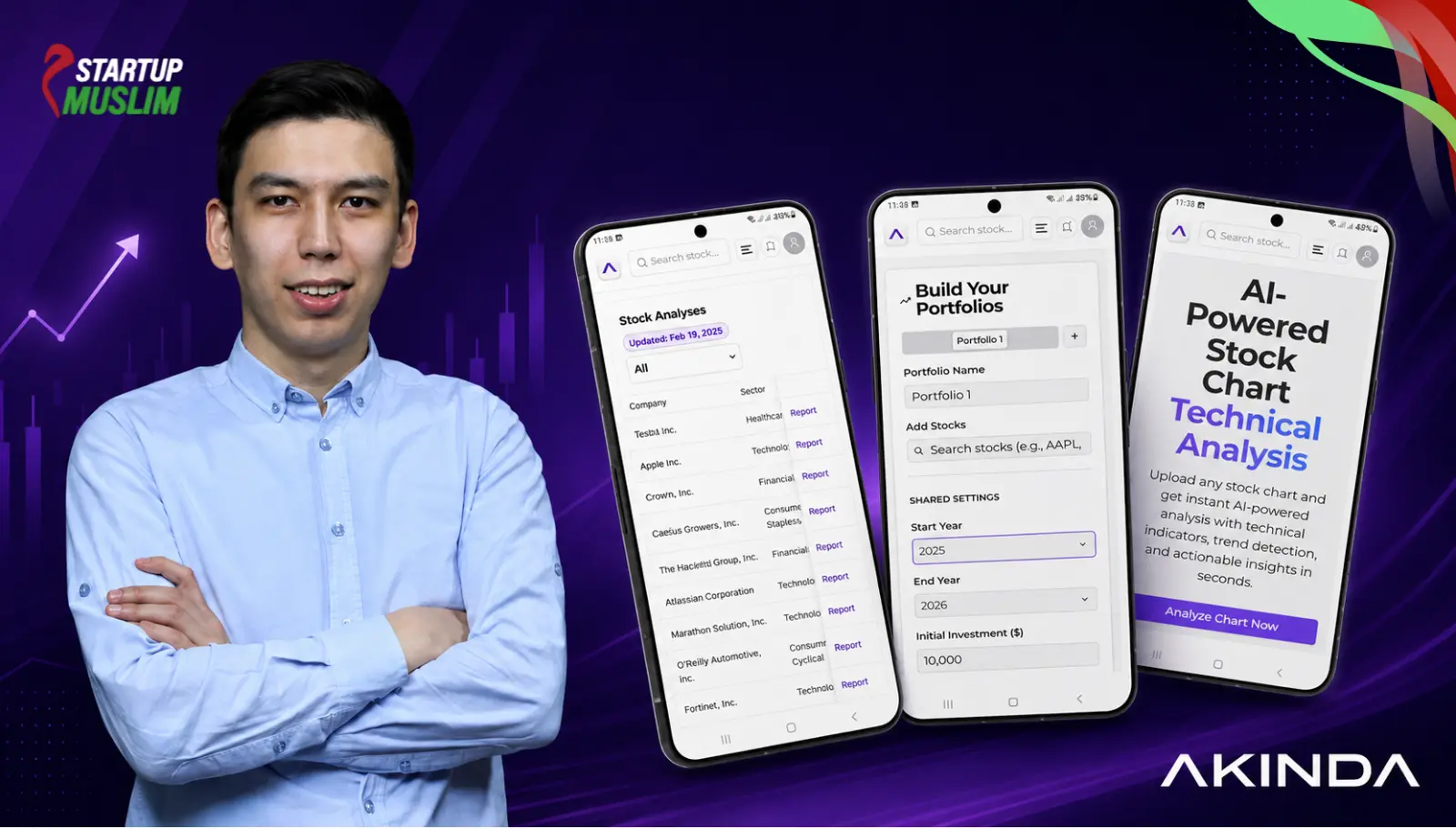
Nurmukhammad Ismoilov spent eight years managing investments before realizing retail traders faced a critical data deficit. For Muslim investors, this deficit centered on a single question: whether specific public equities complied with Islamic finance principles. To answer it, Ismoilov launched Akinda, a financial technology platform that verifies Shariah-compliant stocks. Originally built as a consumer research tool, the Uzbekistan-based startup is now scaling an application programming interface (API) to supply compliance infrastructure for the broader Islamic finance sector.
Replacing the Opaque Green Badge
Akinda emerged from a structural flaw in existing Shariah-screening tools. Incumbent platforms frequently gated their compliance verdicts behind paywalls and offered users a binary pass-fail result without disclosing their methodology. Investors were left to trust a green badge on a stock ticker without reviewing the financial ratios driving the decision.
Akinda exposes the exact calculations behind its verdicts. The platform bases its evaluations on AAOIFI Shari’ah Standard No. 21, relying on public regulatory filings to execute two primary screening layers:
- Business Activity: Excludes companies operating in conventional banking, insurance, alcohol, gambling, and weapons, while enforcing a strict 5% threshold on incidental non-compliant income.
- Financial Structure: Measures interest-bearing debt against market capitalization, strictly capping the ratio at 30% alongside a corresponding screen for interest-earning investments.
If an approved company holds a fractional amount of impermissible revenue, Akinda’s software calculates a precise purification ratio, allowing investors to determine exactly what percentage of their dividends they must donate.
Institutional Infrastructure and Regulatory Tailwinds
While Akinda maintains a free consumer application with more than 10,000 monthly active users and 154,000 completed portfolio screenings, its core commercial trajectory relies on institutional integration. The startup currently services three live B2B API contracts, distributing Shariah-compliance data to financial entities across the United States, Europe, and the Middle East.
This transition toward institutional services coincides with structural changes in Akinda’s domestic market. Uzbekistan recently enacted Law ZRU-1126, establishing a dual banking framework that permits dedicated Islamic banks and Islamic windows within conventional institutions. Rather than competing as a digital bank, Akinda intends to act as the compliance data layer for these newly authorized entities.
"We’re not a bank and we have no ambition to become one," Ismoilov explains. "We want to be the compliance and research layer those banks build on."
A Lean Global Strategy
Despite operating from Tashkent, Akinda engineered its platform in English from inception to target a global user base. The company operates with a headcount of fewer than ten. Chief Technology Officer Mahmud Buriev manages the consumer product, while an internal machine learning division extracts debt and operating lease data from regulatory filings to feed the B2B API.
Akinda does not custody assets or execute trades. Instead, it maintains API integrations with major brokerages—including Interactive Brokers, Alpaca, and Charles Schwab—allowing users to sync their portfolios for real-time compliance analysis. Human oversight remains a fixture in the automated process; Dr. Muhammad N. Khan, an AAOIFI CSAA-certified advisor, governs the platform's Shariah methodology.
By prioritizing raw financial data over proprietary scores, Akinda separates religious advisory from investment viability. The platform verifies compliance, but leaves the ultimate investment decision to the user, providing the technical infrastructure required to navigate global capital markets without violating religious parameters.