

Qaf Islamic AI Crosses 25,000 Users, Navigating Token Economics and the 'Fatwa Bot' Trap
Qaf Islamic AI Reaches 25,000 Users Amid Push for Source-Backed Scholarship
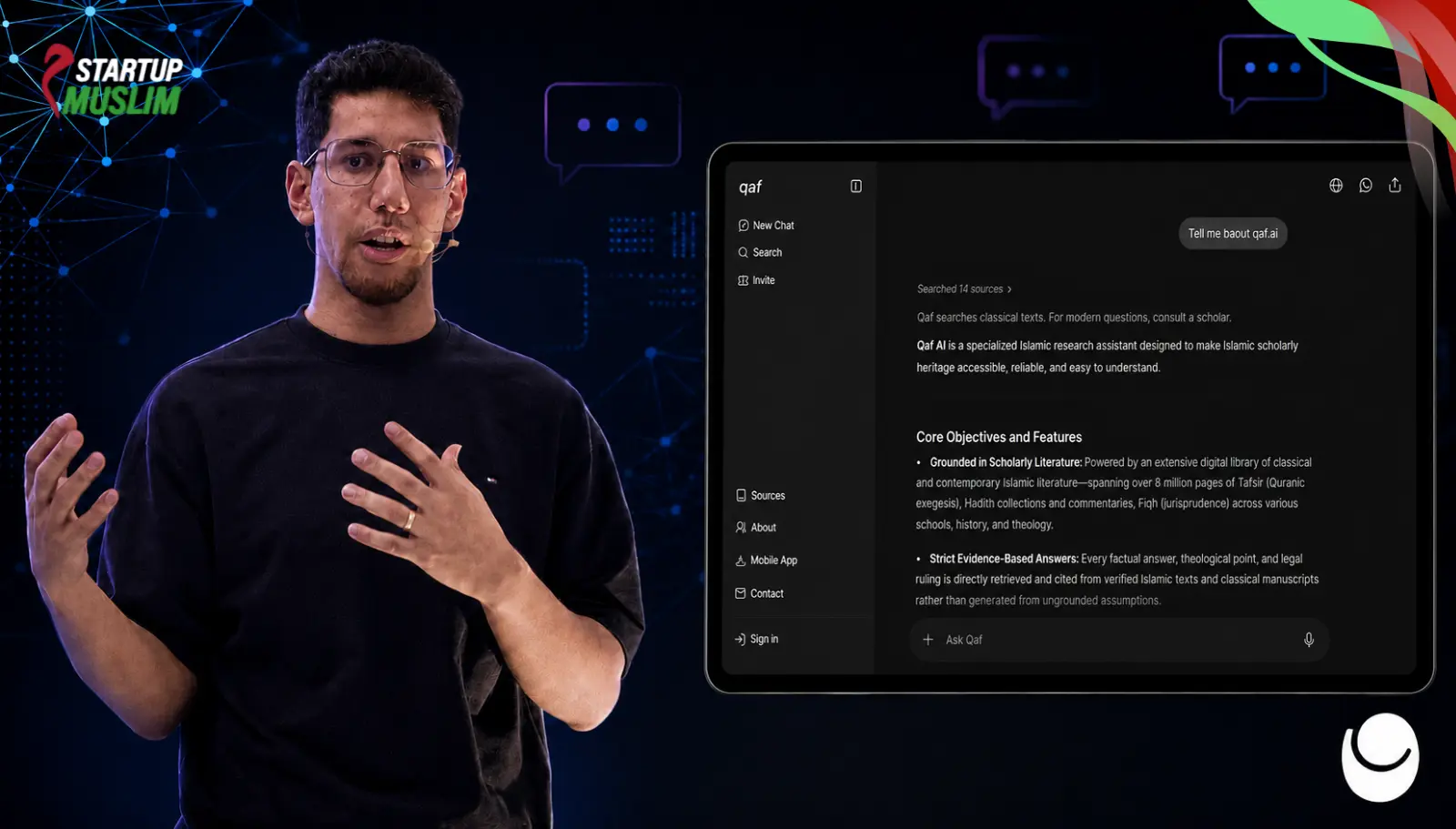
Qaf Islamic AI has crossed 25,000 users, marking a critical growth milestone for a platform attempting to solve generative AI’s most dangerous flaw: the algorithmic erasure of nuance. Built by Abdellatif Abdelfattah, the engineering mind behind Tarteel and Agentset, Qaf indexes more than 8,000 Islamic texts. Rather than synthesizing complex theology into a single, authoritative output, the platform surfaces scholarly disagreement and requires users to trace answers back to foundational sources.
Applying artificial intelligence to Islamic jurisprudence raises the stakes of algorithmic hallucination. A fabricated hadith or stripped context actively distorts religious practice. Qaf engineers around this fatal flaw by refusing to let the model play the role of an absolute authority.
"Qaf does not present a particular view as the correct one," Abdelfattah said. "Instead it showcases the different opinions and highlights if one holds a strong majority."
Taming Consumer AI Economics
Behind Qaf’s consumer interface sits infrastructure powered by Agentset, Abdelfattah’s B2B enterprise retrieval company. While Agentset handles slow-moving, high-ticket enterprise contracts, Qaf faces the brutal unit economics of scaling a consumer AI product. Every user query burns tokens, instantly driving up compute costs.
As Qaf's user base surged, daily compute expenditures spiked to $8,000 per day. Through aggressive backend optimization, Abdelfattah’s team slashed that burn rate to roughly $1,500 daily. This massive cost compression exposes a hidden reality in consumer AI: user acquisition routinely outpaces business sustainability.
- B2B vs. B2C Dynamics: Enterprise AI secures predictable, high-value revenue, while consumer AI drives rapid global adoption but requires relentless cost optimization to survive.
- The Token Tax: Serving 25,000 active users requires tight constraints on model selection, retrieval architecture, and pre-generation processing to prevent runaway inference costs.
Defeating the "Fatwa Bot" Trap
Conventional generative models manufacture certainty, collapsing centuries of scholarly debate into clean, confident summaries. Qaf explicitly rejects this compression. When users query the platform, it retrieves recognized scholarly opinions and exposes the historical disagreements between various schools of jurisprudence.
To combat hallucinations, Qaf binds its language model strictly to retrieved Islamic materials. Quranic verses and hadith appear as clickable citations, forcing transparency upon the model. The machine generates the interface, but authority remains securely anchored in the text.
"The core of Qaf is that users can trust the output—that it’s actually coming from an underlying Islamic text," Abdelfattah noted. "I don’t think Qaf replaces human scholarship. Qaf is good for retrieving specific information."
Scaling Governance Alongside Growth
As Qaf scales from tens of thousands to potentially millions of users, Abdelfattah acknowledges that engineering safeguards alone cannot govern the platform's religious influence. The team plans to establish a formal scholarly board to oversee how the AI processes and frames religious knowledge.
By marrying Silicon Valley product velocity with Islamic intellectual tradition, Abdelfattah aims to eliminate the friction between ordinary Muslims and classical scholarship. Qaf's ultimate success hinges on its ability to maintain a delicate boundary: empowering users to research deeply without tricking them into believing the algorithm is a scholar.