

Bypassing Code-Gen Hype, Ishraq Khan’s Kodezi Deploys ‘Quiet AI’ to Conquer Enterprise Technical Debt
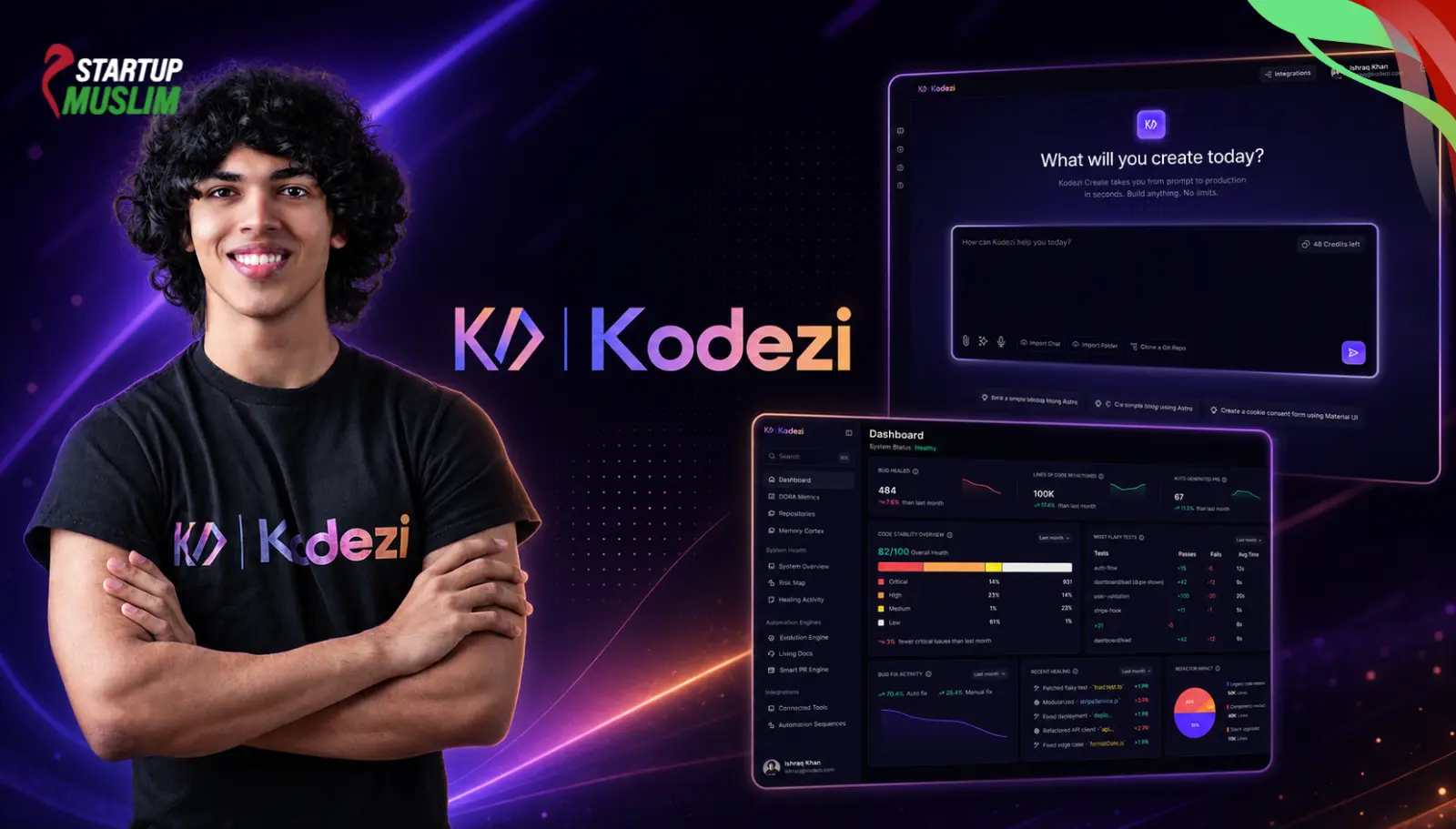
While Silicon Valley races to generate AI code, Ishraq Khan focuses on the impending fallout: maintaining it. Khan’s startup, Kodezi, deploys autonomous artificial intelligence to untangle technical debt, silently debugging and securing billions of lines of enterprise software.
The contrarian strategy pays off. Kodezi commands a user base of five million developers, processes up to 50 million monthly API calls, and operates on more than $2 million in venture capital—securing its first $800,000 when Khan was just nineteen.
Kodezi abandons standard text-generation wrappers to build proprietary infrastructure. The company engineered Chronos, a debugging-first language model purpose-built for repository-scale code comprehension. Trained on 15 million debugging sessions, Chronos achieves a 67.3% fix accuracy in real-world scenarios and an 80.33% resolution rate on the SWE-bench Lite benchmark.
Khan frames the platform as an "AI CTO" rather than a simple coding assistant. Operating as "quiet AI," Kodezi digests entire repositories, maps configuration files, analyzes deployment logs, and permanently remembers architectural decisions to neutralize system failures before outages occur.
But hyper-growth exposed brutal infrastructure realities. Processing millions of autonomous debugging workflows drained compute resources and ballooned operational costs. Khan forced a hard pivot, shedding vanity metrics to target high-retention enterprise clients. He streamlined operations, curbed computational waste, and traded short-term hype for durable revenue.
This operational maturity stems from an unconventional foundation. Emigrating from Bangladesh to the U.S. in 2011, Khan taught himself programming via YouTube at age eight. He launched Kodezi in high school as a peer-to-peer coding tool before recognizing developers spent vastly more time fixing broken code than writing it. He ultimately declined 40 traditional college acceptances to scale the company full-time.
Today, Khan anchors his executive playbook in an Islamic framework. He views investor capital, team leadership, and customer data as Amanah (a sacred trust) and demands Ihsan (excellence) in product engineering, ensuring Kodezi relies on transparent, verifiable research rather than marketing hype.
Khan credits Tawakkul—active reliance on God coupled with relentless execution—for navigating the startup’s most severe technical and operational hurdles. His blueprint proves Muslim founders can capture global market share and pioneer frontier tech while operating with unyielding spiritual integrity.