


Shamoon Siddiqui’s Human Friendly Robotics Deploys Specialized Collaborative Machines to Solve Construction Labor Deficits
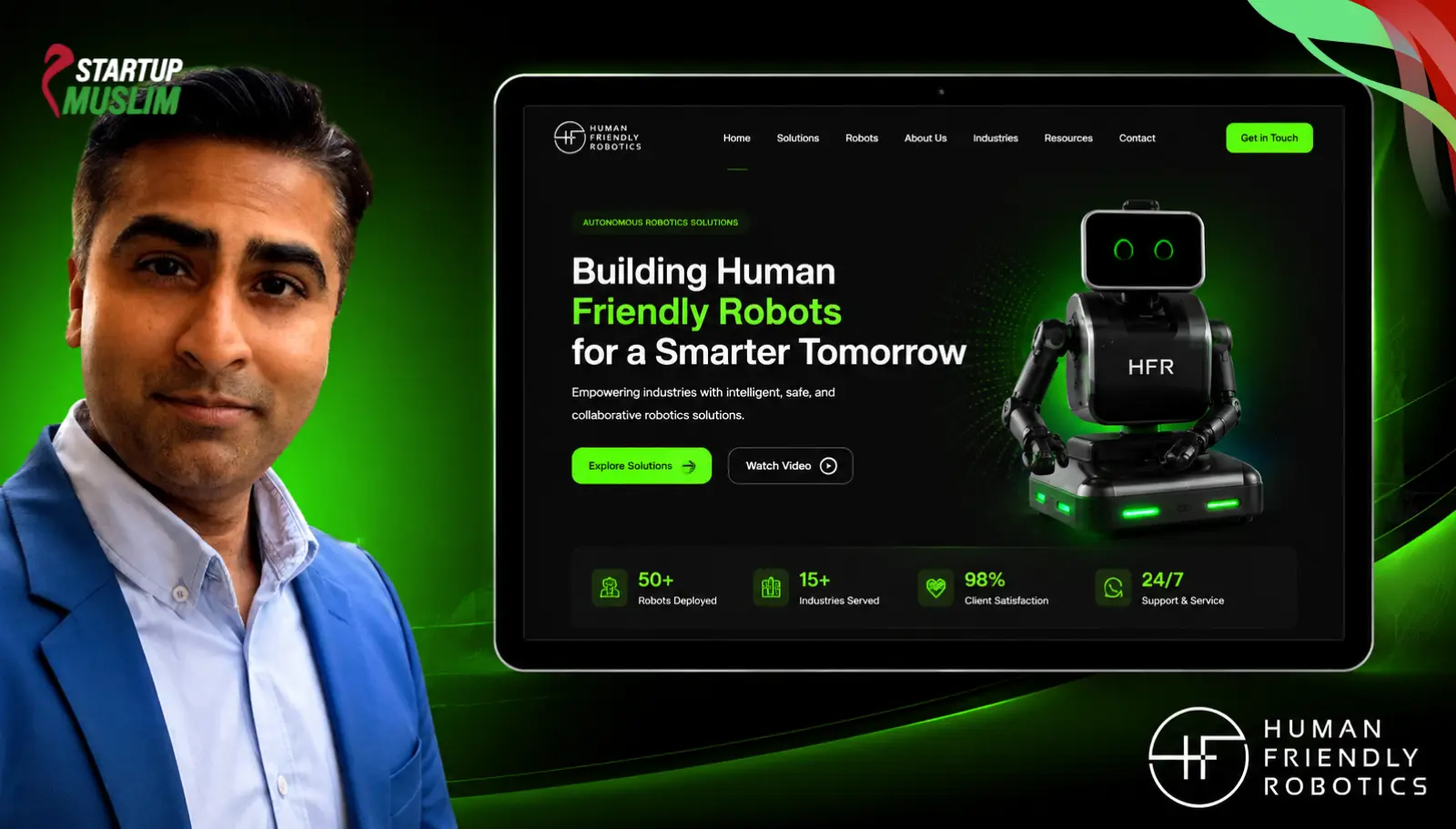
After two decades building software companies, serial entrepreneur Shamoon Siddiqui is attacking physical infrastructure bottlenecks. His latest venture, Human Friendly Robotics (HFR), deploys specialized collaborative robots designed to augment skilled tradespeople rather than replace them, actively addressing chronic labor shortages in the trillion-dollar construction sector.
Rejecting the Humanoid Hype for Purpose-Built Utility
Siddiqui fundamentally rejects the prevailing deep-tech narrative that prioritizes general-purpose humanoid robots. Because construction sites lack the controlled predictability of manufacturing floors, HFR engineers purpose-built machines that execute high-strain, repetitive tasks while human workers manage complex decision-making, job sequencing, and edge cases.
Construction does not need machines that imitate workers—it needs purpose-built machines that solve expensive problems well.
This philosophy manifests in HFR’s hardware strategy. Instead of mimicking the human form, HFR's specialized robots leverage a shared underlying software architecture—encompassing navigation, perception, and fleet management—housed within highly specialized mechanical chassis.
Commercializing Tyler and Wattson
HFR optimizes its hardware for schedule certainty and immediate integration into existing workflows. The company currently fields two flagship platforms:
- Tyler: A collaborative flooring robot that systematically places tiles with mechanical precision. During a live commercial deployment at Plaza Las Américas in Puerto Rico, the unit achieved an active placement rate of 1.79 square feet per minute. Human installers remain in the loop to handle leveling clips, edge cuts, and quality control.
- Wattson: Engineered to capitalize on the AI-driven data center boom, this system automates the feeding and pulling of heavy electrical cables. By reducing brute-force physical strain, Wattson protects electricians while accelerating critical infrastructure deployment.
Over the next 12 months, HFR aims to secure aggressive, tangible field metrics: installing 100,000 square feet of flooring and executing 100 commercial wire pulls in partnership with industry giants like Mortenson.
Patient Capital and Strategic Scale
Hardware iteration demands patient capital. Siddiqui secured crucial early backing from Muslim community investors who grasped his long-term vision before extensive field data existed. This support enables HFR to prioritize rigorous real-world validation over the rapid, often-flawed deployment cycles typical of software startups.
While massive infrastructure and data-center investments in Saudi Arabia and the United Arab Emirates position the Middle East as a highly lucrative future market, HFR deliberately delays global expansion. Siddiqui insists on cementing repeatable commercial success in North America first. When international scaling begins, HFR will execute through established local contractors and operating partners, ensuring sustainable service and support without bloating its own infrastructure.
The Deep-Tech Directive: Sell Before You Scale
For deep-tech founders, Siddiqui offers an uncompromising directive: identify a narrow, expensive problem, put a machine in the field, and let real-world performance dictate growth. By prioritizing job-site reliability and worker collaboration over total autonomy, Human Friendly Robotics is engineering a future where purpose-built machines give skilled labor unprecedented operational leverage.