


Kanam Pay Transforms African Mobile Money By Turning the Face into Financial Infrastructure
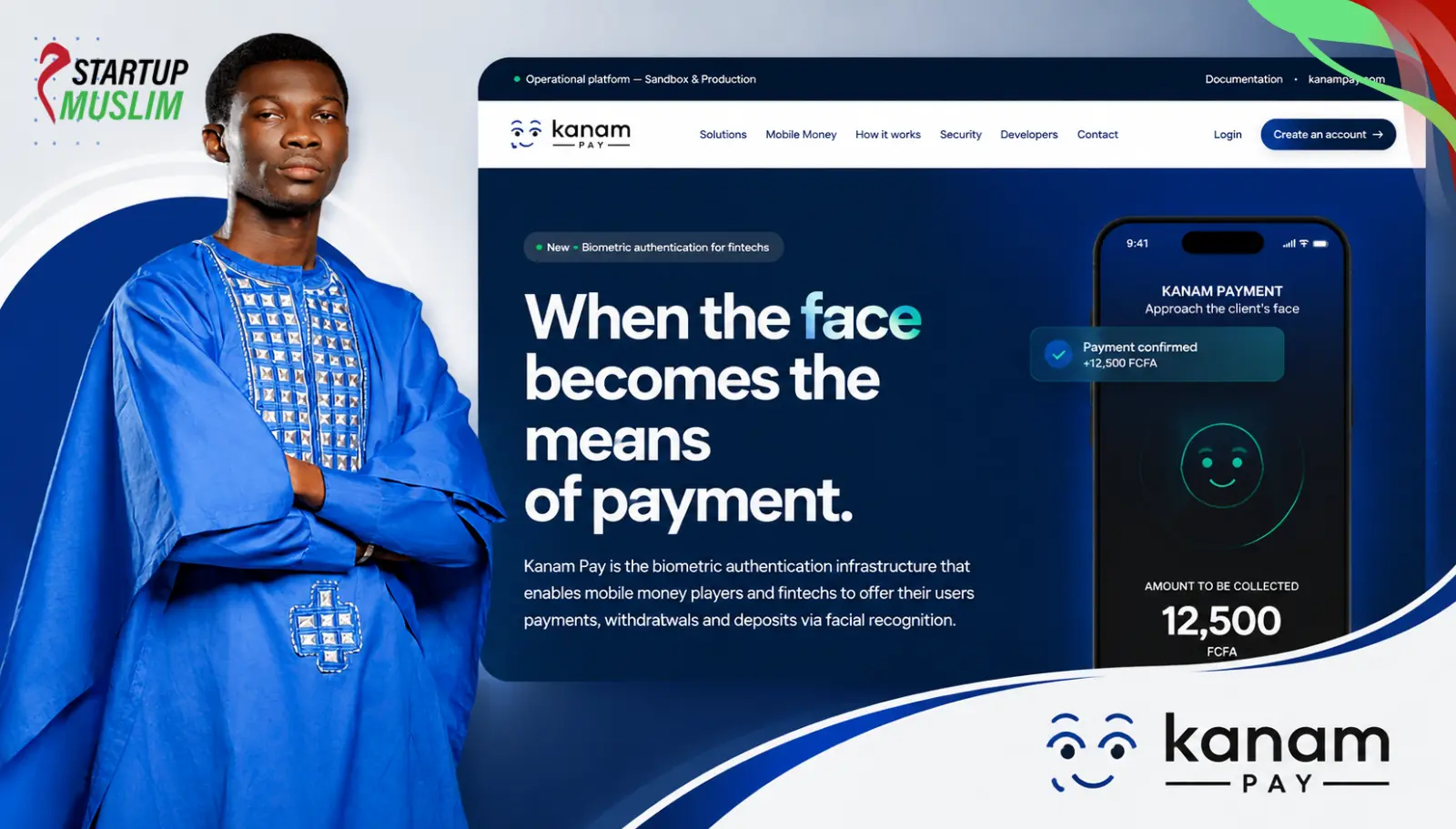
African fintech faces a persistent, physical bottleneck: the smartphone. While mobile money revolutionized capital access across the continent, it tethered financial freedom to battery life, SIM cards, and fragile hardware. Kanam Pay, led by Co-Founder and CEO Aarif Mohamed Konnon Tiama, is stripping the device out of the equation.
By transforming a user’s face into a secure cryptographic key, Kanam Pay has built a biometric infrastructure layer that allows financial institutions to authenticate payments, deposits, and withdrawals without requiring a customer to carry a phone.
The startup recently executed a critical pivot. Abandoning a capital-intensive direct-to-consumer (B2C) model, Kanam Pay now operates as a high-leverage B2B application programming interface (API). Instead of burning cash to acquire individual merchants and users, the company embeds its technology into existing banks, fintechs, and mobile money operators.
Solving the Cold Start Problem
Kanam Pay’s genesis traces back to event ticketing. Tiama’s earlier venture, Tickets Place, exposed him to the friction of lost QR codes and forgotten passwords. His team experimented with facial recognition for event entry, which quickly revealed a larger structural flaw in African payments: when the digital device fails, the money vanishes.
The initial iteration of Kanam Pay attempted to build a proprietary payment network. However, building both the consumer demand and merchant acceptance sides of a marketplace simultaneously proved prohibitive.
Founders should protect the problem they are trying to solve, not necessarily the first solution they imagine.
That realization triggered the B2B pivot. Today, a partner institution—such as a bank or mobile money operator—retains regulatory compliance, the customer relationship, and the financial rails. Kanam Pay simply supplies the biometric authentication layer.
Infrastructure Economics and Scale
The B2B model fundamentally alters Kanam Pay’s growth trajectory. A single institutional integration replaces thousands of individual retail acquisitions. The company targets the UEMOA (West African Economic and Monetary Union) and CEMAC (Central African Economic and Monetary Community) regions, leveraging established agent networks to scale rapidly.
Early traction validates the strategy. A landmark partnership with LigdiCash immediately unlocks distribution to over 100,000 users and 6,000 withdrawal points. Kanam Pay has also engaged regional players including:
- Peya Pay (Côte d’Ivoire)
- Soutra Money (Guinea)
- Sank Money (Burkina Faso)
- Ziguida Cash (Central African Republic)
Security as the Core Product
Replacing hardware-based authentication with biometrics demands rigorous security architecture. Tiama outright rejects the notion of infallible biometrics, choosing instead to layer defenses and transparently audit systems.
Under the hood, Kanam Pay integrates:
- Liveness Detection: Anti-spoofing mechanisms to neutralize attacks using photographs, deepfakes, or video playback.
- Multi-Factor Verification: Facial biometrics paired with secondary PIN authentication.
- Data Segregation: Encrypted biometric templates walled off from raw transactional data.
Operating with a stated 99.8% biometric accuracy and a 99.99% infrastructure SLA, Kanam Pay treats security as continuous compliance rather than a static product feature.
If the technology is going to handle people’s money and identities, convenience cannot come at the expense of security.
The Road to Invisibility
Over the next 24 months, Kanam Pay will focus entirely on converting pilot programs into active production deployments, industrializing its APIs, strengthening fraud prevention, and preparing for a strategic venture funding round.
For Tiama, success means Kanam Pay remains entirely invisible to the end user. The endgame is not brand recognition, but infrastructure resilience. By ensuring that a customer’s access to their capital outlives their phone battery, Kanam Pay is quietly eliminating the final barrier to true financial inclusion across Africa.